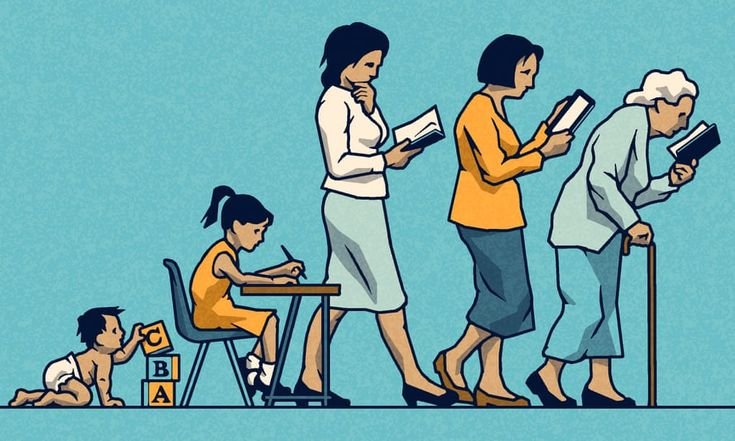

AI can help us produce better work. Whether it also helps us become better thinkers depends on how we use it, what we practise and what we can still do when the tool is switched off.
Imagine asking an AI assistant to explain a difficult idea. Within seconds, it produces an orderly answer, an analogy and a reassuring conclusion. Everything seems clear. Then someone asks you to explain the same idea without looking at the screen. You discover which parts you understood and which parts merely sounded convincing.
This is a useful starting point for thinking about AI and human capability. The quality of a finished answer and the understanding of the person using it are separate outcomes. Schools, universities and workplaces need to pay attention to both.
What the research shows
A 2025 study by Hamsa Bastani and colleagues tested AI support in high-school mathematics. Students using a general-purpose style AI interface performed better during supported practice, but worse on subsequent assessments without AI than students who had practised without it. A tutor designed to give teacher-informed hints largely mitigated that disadvantage. The finding concerns a particular learning setting; it does not establish that AI causes lasting cognitive decline. [1]
Another 2025 randomised trial, by Greg Kestin and colleagues, found greater learning gains with a carefully designed AI tutor than with an active-learning class in undergraduate physics. The tutor incorporated established teaching practices. This supports the potential of structured AI-assisted teaching, while leaving questions about long-term retention and performance in other subjects open. [2]
Read together, these studies suggest that the educational design matters. Access to a powerful model is only one part of a learning experience. The sequence of questions, opportunities to attempt a solution and the form of feedback also deserve scrutiny.
Keep the learner doing some of the work
A practical approach is to begin with a short attempt of your own. Write the argument, sketch the explanation or identify the step you cannot complete. Then ask the AI for a hint, a counterexample or a critique. This gives the interaction a purpose beyond receiving a finished response.
For example, a student could ask, “Which assumption in my explanation needs checking?” A researcher could request competing interpretations of a finding, then examine the original papers. A policy team could use AI to identify objections to a proposal before deciding which objections the evidence supports. These are suggested working practices, not a validated recipe for every learner.
Close the interaction by testing your understanding. Can you explain the idea in your own words? Can you apply it to a fresh example? Research on vocabulary learning found that repeated retrieval improved later recall, even after learners had initially produced the right answer. Recalling knowledge is itself part of learning. [3]
Checking an AI response also requires checking its evidence. Open the source. Look for the actual population, comparison and outcome. A convincing explanation of a study cannot substitute for finding out what the study measured.
What institutions should measure
For an institution choosing an AI learning tool, an attractive demonstration is a beginning. Evaluation should examine what learners can do afterwards: explain a concept, notice a flawed argument, solve an unfamiliar problem and recognise uncertainty. Some assessments should take place without assistance, alongside tasks that test skilled use of the technology.
In India, such evaluation should include the languages and settings in which the tool will be used. A system that works well for confident English-speaking university students still needs testing with other learners. Teachers should help define success and identify where a fluent response conceals a misunderstanding.
This is also a practical way to examine claims about building brain capital. Ask whether the investment increases people’s usable knowledge and capacity to make decisions over time. Faster completion can be valuable, but institutions should measure learning directly.
The useful question at the end of an AI-assisted task is therefore personal and concrete: what can I now understand, check or do that I could not do before?
References
- Bastani H, Bastani O, Sungu A, et al. Generative AI without guardrails can harm learning: Evidence from high school mathematics. Proceedings of the National Academy of Sciences. 2025;122:e2422633122. Read source
- Kestin G, Miller K, Klales A, Milbourne T, Ponti G. AI tutoring outperforms in-class active learning: an RCT introducing a novel research-based design in an authentic educational setting. Scientific Reports. 2025;15:17458. Read source
- Karpicke JD, Roediger HL III. The critical importance of retrieval for learning. Science. 2008;319:966–968. Read source