The capacity to learn continues into adulthood and older age. Turning that capacity into opportunity requires good teaching, meaningful practice and institutions that make room for people to begin again.
A woman learning to read in adulthood, a worker adapting to unfamiliar equipment and an older person learning to use a digital service have something in common. Each is developing a skill that can change everyday life. Their progress deserves attention even when it produces no examination certificate.
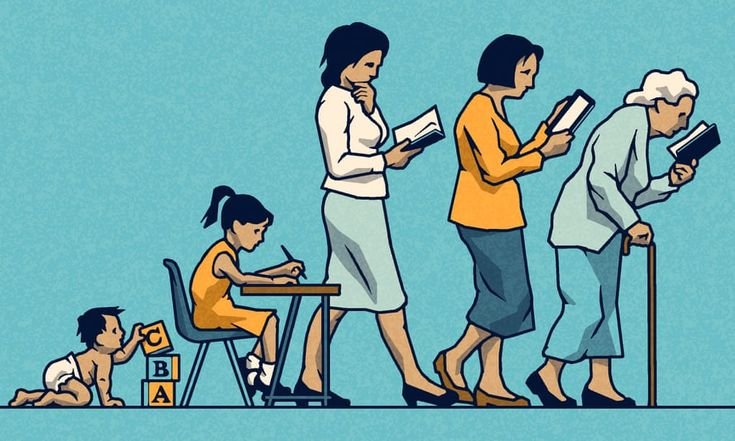
We often organise education as though learning belongs mainly to childhood, followed by decades of applying what was acquired. A life-course approach asks a different planning question: what opportunities should people have to learn at each stage of their lives?
The adult brain remains capable of change
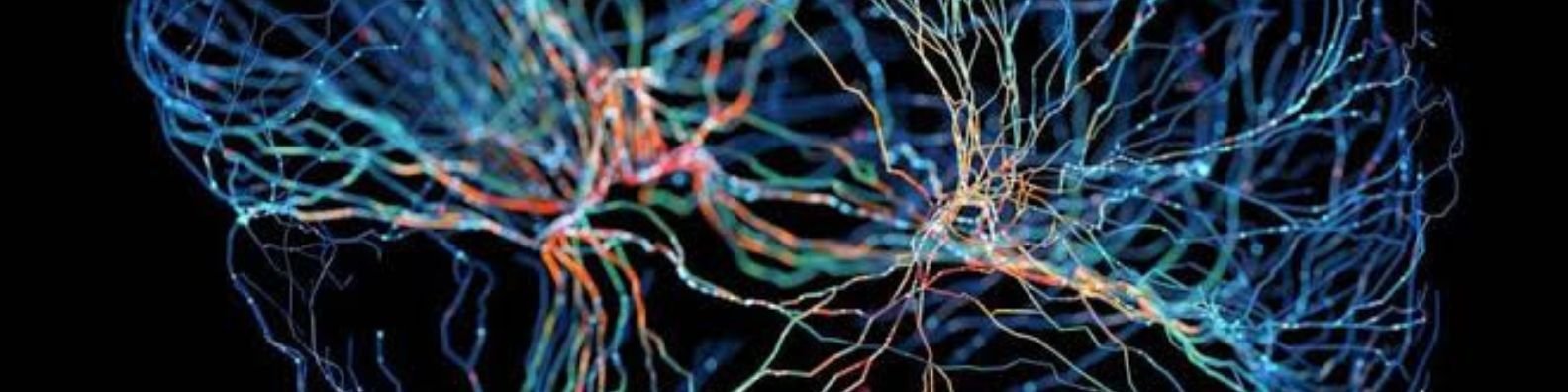
Neuroplasticity describes the nervous system’s capacity to change with experience. Evidence relevant to education comes from a study by Stanislas Dehaene and colleagues comparing adults with different literacy histories, including people who learned to read as adults. Literacy was associated with differences in brain responses to written and spoken language. Many of these differences were also present when reading had been acquired in adulthood. [1]
The study supports the importance of adult learning, but it should not become a promise of unlimited transformation. It compared groups with different histories; it was not a randomised test of an adult education programme. Learning still requires suitable opportunities, and people will differ in their starting points and support needs.
Later life also offers scope for specific gains. The ACTIVE trial enrolled more than 2,800 independently living older adults. At ten years, benefits of reasoning and processing-speed training remained detectable in the abilities targeted by those programmes; the corresponding benefit of memory training was no longer maintained. Participants in the training groups also reported less difficulty with everyday activities. [2]
These findings support a measured conclusion: some structured training can have durable benefits. They do not establish that every brain-training app improves general intelligence or prevents dementia. Improving a practised task, functioning more independently and preventing disease are different outcomes.
Make learning useful and achievable
A useful programme starts with a task that matters to the learner. Reading a bus timetable, recognising a misleading message or understanding a workplace instruction gives practice a clear purpose. The teaching can then break that task into manageable steps and provide opportunities to try again.
Practice should include bringing knowledge to mind. In a well-known experiment on vocabulary learning, repeated retrieval improved delayed recall after an answer had first been learned. [3] One practical application is to invite learners to explain or demonstrate a skill without immediately showing them the answer, then help them correct errors.
Programme designers should also ask what prevents participation. Is the venue reachable? Are the materials available in a familiar language? Can someone attend around work or caregiving? Are the text, sound and instructions accessible? These questions should be settled with prospective learners before attendance problems are interpreted as a lack of motivation.
The World Health Organization’s life-course framework places learning and social connection alongside physical health, safe environments and access to quality services as determinants of brain health. [4] Education planning therefore has good reason to engage with health and community services.
A public commitment to second chances
For India, a practical starting point would be locally designed learning opportunities through libraries, community centres, workplaces and education institutions. An adult literacy group and a digital skills course for older residents need different teaching. Both should be judged by whether participants gain capabilities they value.
Evaluation could track a few concrete outcomes: whether a person can complete the chosen task, repeat it after several weeks and use the skill outside the classroom. Participation and completion matter, but they are not sufficient evidence of learning. Programmes should also ask who was unable to attend and why.
The language of brain capital can help make the case for sustained investment, provided it recognises benefits beyond paid employment. Understanding a health decision, enjoying a book and participating in community life have value in themselves.
A society committed to lifelong learning makes it easier to begin at any age. Its success is visible when more people can act with understanding and confidence in their everyday lives.
References
- Dehaene S, Pegado F, Braga LW, et al. How learning to read changes the cortical networks for vision and language. Science. 2010;330:1359–1364. Read source
- Rebok GW, Ball K, Guey LT, et al. Ten-year effects of the Advanced Cognitive Training for Independent and Vital Elderly cognitive training trial on cognition and everyday functioning in older adults. Journal of the American Geriatrics Society. 2014;62:16–24. Read source
- Karpicke JD, Roediger HL III. The critical importance of retrieval for learning. Science. 2008;319:966–968. Read source
- World Health Organization. Optimizing brain health across the life course: WHO position paper. Geneva: WHO; 2022. Read source